
LATEST NEWS
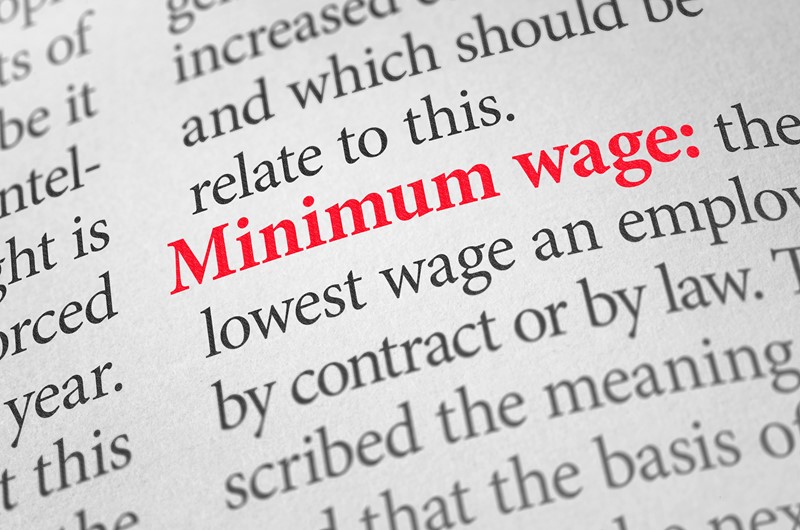











What counts as working time for minimum wage purposes
Employers must ensure they are paying staff at least the National Minimum Wage (NMW) or National Living Wage (NLW). The NMW and the NLW are the minimum legal amounts that employers must pay their workers. The latest NMW and NLW rates took effect on 1 April 2025. The current hourly rate for the NLW is £12.21. For those aged 18 to 20, the NMW is £10.00 per hour. Workers aged 16 to 17 and apprentices are entitled to £7.55 per hour.
The minimum wage is calculated as an hourly rate, but it applies to all eligible workers however they are paid. This means that even if someone is paid an annual salary, and it is paid by the piece or in other ways, they must still calculate their equivalent hourly rate to check whether they are receiving at least the minimum wage.
To do this correctly, it is also important to understand what counts as working time under NMW rules.
According to HMRC guidance, for all types of work, this includes time spent:
- at work and required to be working, or on standby near the workplace (but do not include rest breaks that are taken);
- not working because of machine breakdown, but kept at the workplace;
- waiting to collect goods, meet someone for work or start a job;
- travelling in connection with work, including travelling from one work assignment to another;
- training or travelling to training;
- at work and under certain work-related responsibilities even when workers are allowed to sleep (whether or not a place to sleep is provided).
Working time does not include time spent:
- travelling between home and work;
- away from work on rest breaks, holidays, sick leave or maternity leave;
- on industrial action; and
- not working but at the workplace or available for work at or near the workplace during a time when workers are allowed to sleep (and you provide a place to sleep).
Source:HM Revenue & Customs | 01-09-2025
Why your tax code might change
The letters in your tax code indicate whether you are entitled to the annual tax-free personal allowance. These codes are updated each year and help employers calculate how much tax should be deducted from your salary.
For the current tax year, the basic personal allowance is £12,570. The tax code corresponding to this amount is 1257L, which is the most common tax code used for those with a single job, no untaxed income, and no unpaid tax or taxable benefits (such as a company car).
HMRC updates your tax code when your circumstances change, and your taxable income is affected. Some common reasons why your tax code may change include:
- Starting a new job. If you begin working for a new employer, HMRC may issue a new tax code based on your earnings, especially if they haven’t yet received your full income details.
- Receiving taxable state benefits. Certain state benefits are taxable. If you start receiving them, HMRC may adjust your tax code to account for the additional income.
- Taking on an additional job or receiving a pension. If you begin earning from another job or start drawing a pension, your tax code may be updated to reflect this extra income.
- A change to your weekly State Pension amount. If your weekly State Pension payments change, HMRC may revise your tax code to ensure the right amount of tax is collected.
- Changes to job-related benefits. If your employer informs HMRC that you have started or stopped receiving benefits like a company car or private healthcare, your tax code will likely change to reflect this.
- Claiming Marriage Allowance. If you transfer part of your Personal Allowance to your spouse or civil partner, or they transfer it to you, HMRC will adjust your code to reflect the change in allowances.
- Claiming tax-deductible expenses. If you claim tax relief on work-related expenses (like uniforms, tools, or mileage), your code might change to reduce the tax you pay during the year.
It is important to check your tax code is correct. If you have any questions, we would be happy to help.
Source:HM Revenue & Customs | 01-09-2025
Are you selling goods or services on a digital platform?
From 2024, platforms like eBay, Vinted and Airbnb must report seller data to HMRC, so check your tax responsibilities.
If you sell goods or services on a digital platform it is important to understand your tax responsibilities. This can apply whether your sales are a part-time income source or your main income. Even casual selling online may mean you need to report earnings and potentially pay tax.
You may need to pay tax if you engage in activities on digital platforms like:
- Buying and reselling items online or making things to sell (even as a hobby).
- Providing services online, such as tutoring, repairs, food delivery, dog walking, or equipment hire.
- Creating digital content, like podcasts, YouTube videos, or social media influencing.
- Earning income by renting out property or land, like letting a holiday home, running a bed and breakfast, or renting out a parking space on your driveway.
Since 1 January 2024, digital platforms (such as eBay, Vinted, Etsy and Airbnb) have been required to collect and report seller data to HMRC. The first reports covered the period from 1 January to 31 December 2024, with information submitted to HMRC by 31 January 2025.
The same rules apply in 2025, meaning income earned this calendar year (January to December 2025) will be reported by 31 January 2026.
Platforms must report your information if either of the following applies:
- You made 30 or more sales in the year.
- You earned over €2,000 (about £1,700).
The digital platforms will also give you a copy of the data they send to HMRC, which can help when completing your self-assessment return.
If you are earning money online you should ensure you check your tax responsibilities. The rules are clear, and platforms are now required to report many types of earnings directly to HMRC.
Source:HM Revenue & Customs | 01-09-2025
Balancing access to justice and abuse of process
An extended civil restraint order (ECRO) was issued against a prolific Employment Tribunal (ET) litigant for presenting repeated and baseless claims.
A Mr. Khan has been described as a prolific litigant, having issued no fewer than 42 largely unsuccessful tribunal claims since 2017. These various failed claims have typically involved allegations of disability discrimination and a failure to make reasonable adjustments in recruitment processes. Many claims were struck out for having no reasonable prospect of success or simply as an abuse of process. Only two claims, levelled against solicitors' firms, were settled for "nuisance value payments" of £700 and £1,000. Mr. Khan has also made many unsuccessful applications to adjourn hearings, often on medical grounds, alongside numerous failed attempts to challenge ET decisions.
The High Court granted the claimants’ application for an ECRO, restraining the defendant from issuing or presenting claims or appeals related to job applications in the tribunal system without prior court permission for a period of three years.
This decision strengthens the mechanisms available to safeguard judicial processes from abuse. It reaffirms that higher courts can step in to protect tribunals from those individuals who repeatedly file baseless claims or appeals without legal merit. This is crucial for preventing the system from being overwhelmed by vexatious litigation, ensuring that resources are available for legitimate disputes.
For individuals who represent themselves in court, while the judiciary strives to ensure fairness and assist unrepresented parties, the case firmly reiterates that procedural rules and the fundamental principles of legal merit still apply. It demonstrates that courts will not tolerate the deliberate misuse of legal processes. Thus, employers and their legal counsel should be wary of disgruntled employees with histories of spurious claims and seek to have baseless claims struck out on such grounds.
Source:Tribunal | 01-09-2025
Keeping your best people with flexible working
For many small business owners, finding and keeping good staff is one of the biggest headaches. Recruitment is costly, time-consuming and uncertain. That is why focusing on staff retention is one of the smartest moves you can make.
People stay where they feel valued. Pay matters, of course, but many small businesses cannot simply compete with bigger firms on salary. The good news is that today’s workforce values other things just as highly, such as flexibility, wellbeing and opportunities to grow.
Flexible working is top of the list. Offering staff the chance to adjust hours, work some days from home or fit work around family life can make your business stand out as an attractive employer. It costs very little to implement but makes a huge difference to loyalty and morale.
Wellbeing is another area where small firms can excel. Simple steps such as promoting regular breaks, encouraging a healthy work-life balance or creating a supportive team culture go a long way. Staff who feel cared for are more likely to give their best and stay longer.
Training is also key. Investing in low-cost learning opportunities, whether through online courses, mentoring, or in-house skill sharing, shows employees that you are committed to their development. People who see a future in your business are less likely to look elsewhere.
Remember, retaining staff is not just about avoiding the cost of hiring replacements, it is about protecting relationships with customers and maintaining business know-how. Every time you lose a team member, you also lose some of the experience and trust they have built.
At a time when skilled workers are in short supply, small businesses that look after their people will gain a real competitive edge. A little flexibility, support and encouragement can turn staff into long-term partners in your success.
Source:Other | 31-08-2025
Cash flow resilience and access to funding
Running a small business often feels like walking a financial tightrope. Cash can be flowing in nicely one month, only to dry up the next. With interest rates higher than they were for years and lenders tightening their checks, access to money has become a bigger challenge. That is why focusing on cash flow resilience is so important right now.
Cash flow is not just about survival; it is about giving your business room to grow. If you are waiting too long for customers to pay, your money is tied up when you need it most. A simple review of credit terms, clearer payment reminders, or offering small discounts for early settlement can make a real difference. On the other side, talking to suppliers about extending your payment period may also ease the pressure.
When it comes to funding, traditional bank loans are no longer the only option. Small firms are making use of alternative routes such as peer-to-peer lending, invoice financing, and short-term credit lines. These options can be quicker to arrange, but you need to check the costs carefully so that repayments do not become a burden.
One tip is to keep your financial information in good order. Banks and alternative lenders want to see clear, accurate figures before approving funds. Regular management accounts, cash flow forecasts, and evidence of good record keeping all build confidence. In practice, a well-presented finance pack can be the difference between a “yes” and a “no.”
The message is clear: do not wait until cash is tight to act. Regularly review your inflows and outflows and know what funding options are open to you. A resilient approach to cash flow can protect your business in tough times and put you in a strong position to seize opportunities when they come along.
Source:Other | 31-08-2025
Fixing problems with running payroll
Employers must report pay and deductions correctly to HMRC, but errors can usually be fixed in your next FPS.
Employers need to use payroll software or other payroll services to record employees pay, deductions and national insurance contributions on or before each payday. They also need to consider other deductions such as pension contributions and student loan payments.
These payments are reported to HMRC in real time using a Full Payment Submission (FPS). This submission contains all relevant information for each employee.
If you have made a mistake with an employee’s pay or deductions this can usually be corrected by updating the year-to-date figures in your next regular FPS.
HMRC’s guidance also states that you can correct mistakes by submitting an additional FPS before your next regular FPS is due. You would need to:
- update the ‘this pay period’ figures with the difference between what you originally reported and the correct figures
- correct the year-to-date figures
- put the same payment date as the original FPS
- put the same pay frequency as the original FPS
- put ‘H – Correction to earlier submission’ in the ‘Late reporting reason’ field
If you need to correct an employee’s National Insurance deductions, the action required will depend on whether the mistake occurred in this tax year or earlier tax years. There are also different actions that may be required to fix a mistake with an employee’s student loan repayments, again depending what tax year the mistake relates to.
Source:HM Revenue & Customs | 25-08-2025
Unused pension funds and IHT from April 2027
From 6 April 2027, new measures first announced in the Autumn Budget 2024 will come into force. These changes will bring most unused pension funds and death benefits into the scope of Inheritance Tax (IHT) from April 2027. This represents a major change to the tax treatment of pensions on death and will significantly broaden the IHT net by capturing assets that were previously excluded from tax.
Individuals with significant pension savings should review their estate plans carefully. Beneficiaries inheriting unused pension funds or death benefits may now face an IHT charge, making forward planning essential. Under the revised rules, personal representatives will be responsible for reporting and paying any IHT due, rather than pension scheme administrators.
There are important exclusions to note. Death-in-service benefits paid from registered pension schemes and dependants’ scheme pensions from either defined benefit arrangements or collective money purchase schemes will not fall within the scope of IHT. These will continue to be treated as before.
These reforms follow a technical consultation which concluded in January 2025 and led to changes in how liability is assigned. The new approach has raised concerns about potential issues such as payment delays, added administrative burden, and data privacy risks. As a result, close cooperation between personal representatives and pension providers will become increasingly important to ensure compliance and efficient estate administration.
Source:HM Revenue & Customs | 25-08-2025
What if your pension contributions are excessive?
You can claim tax relief on pension contributions up to 100% of earnings, but exceeding the annual allowance may trigger charges. Tax relief is paid on pension contributions at the highest rate of income tax paid.
The first 20% of tax relief is usually automatically applied by your employer with no further action required if you are a basic-rate taxpayer. If you are a higher rate or additional rate taxpayer, you can claim back any further reliefs on your self-assessment tax return.
There is an annual allowance for tax relief on pensions of £60,000. There is also a three year carry forward rule that allows you to carry forward any unused amount of your annual allowance from the last three tax years if you have made pension savings in those years.
If your total pension contributions are excessive and you exceed the annual allowance, you may face a tax charge. Your pension provider should inform you if you exceed the limit within their scheme, but if you have multiple pensions, you will need to request statements from each provider to check your position. You or your pension provider must pay any tax due from exceeding the limit.
You must report the charge in the ‘Pension savings tax charges’ section of your self-assessment tax return or use form SA101 if filing by paper. This is required even if your pension provider paid all or part of the tax due. You can still claim tax relief on contributions. HMRC does not tax anyone for going over their annual allowance in a tax year if they retired and took all their pension pots because of serious ill health or they died.
Source:HM Revenue & Customs | 25-08-2025
MTD for IT taxpayer exemption
From April 2026, the self-employed and landlords must use MTD for IT, but exemptions may apply in limited cases.
If you are self-employed or a landlord with income over £50,000, you will need to prepare for digital record keeping, quarterly updates and a new penalty system. While most affected taxpayers will be required to comply, there are limited exemptions available.
You can apply for an exemption if you believe you are digitally excluded. HMRC will consider applications on a case-by-case basis once the process opens.
You may be eligible if:
- it is not practical for you to use software to keep or submit digital records – this could be due to age, disability, location, or another reason; or
- you are a practising member of a religious society or order whose beliefs are incompatible with electronic communication and digital record keeping.
In addition, if HMRC has already confirmed that you are exempt from Making Tax Digital for VAT, you will need to contact them again once the MTD for IT application process opens. HMRC will then review your exemption. If your circumstances remain the same then HMRC will confirm you are also exempt from MTD for IT. If not, you will need to reapply.
Some taxpayers are automatically exempt from MTD for IT and do not need to apply.
These include:
- trustees, including charitable trustees and trustees of non-registered pension schemes
- individuals without a National Insurance number, applicable only if one is not held by 31 January before the start of the tax year
- personal representatives of someone who has died
- Lloyd’s member, in relation to your underwriting business
- non-resident companies
If you are automatically exempt, you do not need to apply for an exemption. If you do not use MTD for IT, you must continue to report your income and gains by submitting a self-assessment tax return if required.
Source:HM Revenue & Customs | 25-08-2025
Corporation tax roadmap
With a £50bn shortfall looming, the Chancellor may need to revisit last year’s Corporation Tax roadmap commitments.
As this year’s Autumn Budget approaches, it is an interesting time to revisit the Corporation Tax Roadmap published alongside last year’s Budget on 30 October 2024.
The roadmap sets out the government’s plans for Corporation Tax and a small number of other business taxes over the course of the parliament.
These commitments included:
- Capping the headline rate of Corporation Tax at 25% for the duration of parliament, the lowest rate in the G7.
- Retaining the small profits rate and marginal relief at current rates and thresholds.
- Maintaining the capital allowances system, including permanent full expensing and the £1 million annual investment allowance.
- Maintaining the generosity of R&D reliefs.
- Collaborating with companies on simplification and improving user experience, including HMRC’s path forward on digitisation.
- Developing a new process for increasing the tax certainty available in advance for major investments.
Almost a year later, the Chancellor is facing a significant budget shortfall that could be as high as £50 billion, driven by multiple issues including weak growth, persistent inflation, high debt interest costs and widening deficits.
The government has also committed not to raise income tax, National Insurance or VAT for working people, and to restore frozen tax thresholds in line with inflation from 2028–29.
It remains to be seen whether any of the major commitments outlined in the roadmap and in previous promises to the voting public will be rolled back.
Source:HM Treasury | 25-08-2025
What are the current Income Tax bands and allowances?
Income Tax applies to earnings, pensions, savings, dividends and more, with different bands across the UK nations.
Individuals can be liable to Income Tax at any age. There are special rules to stop parents avoiding tax by putting assets into their children’s names.
The tables below shows the tax rates you pay in each band if you have a standard Personal Allowance of £12,570.
| Bands: England, Northern Ireland and Wales | ||
| Band | Taxable income | Tax rate |
| Personal Allowance | Up to £12,570 | 0% |
| Basic rate | £12,571 to £50,270 | 20% |
| Higher rate | £50,271 to £125,140 | 40% |
| Additional rate | over £125,140 | 45% |
| Bands: Scotland | ||
| Band | Taxable income | Tax rate |
| Personal Allowance | Up to £12,570 | 0% |
| Starter rate | £12,571 to £15,397 | 19% |
| Basic rate | £15,398 to £27,491 | 20% |
| Higher rate | £43,663 to £75,000 | 42% |
| Advanced rate | £75,001 to £125,140 | 45% |
| Top rate | over £125,140 | 48% |
If you earn over £100,000 in any tax year your personal allowance is gradually reduced by £1 for every £2 of adjusted net income over £100,000 irrespective of age. This means that any taxable receipt that takes your income over £100,000 will result in a reduction in personal tax allowances. This means your personal Income Tax allowance would be reduced to zero if your adjusted net income is £125,140 or above.
For the current tax year if your adjusted net income is likely to fall between £100,000 and £125,140 you would pay an effective marginal rate of tax of 60% as your £12,570 tax-free personal allowance is gradually withdrawn.
If your income sits within this band you should consider what financial planning opportunities are available in order to avoid this personal allowance trap by trying to reduce your income below to £100,000.
Source:HM Revenue & Customs | 25-08-2025